Uganda is one of the few African countries where visitors can, with careful planning, see all of Africa’s famous Big Five—a term originally coined by hunters to describe the five most dangerous animals to hunt on foot, but now celebrated as the continent’s most iconic safari species.
African Lion
The African lion is Uganda’s largest predator and one of the highlights of any safari.
Healthy populations occur in Murchison Falls National Park, Queen Elizabeth National Park, and the remote wilderness of Kidepo Valley National Park.
Queen Elizabeth National Park is internationally famous for its tree-climbing lions, particularly in the Ishasha sector. Unlike most lions, these remarkable cats regularly climb large fig trees and rest on sturdy branches during the hottest part of the day. Scientists believe this unusual behaviour helps them escape insects, avoid the midday heat, and gain better views of potential prey.
Watching a pride of lions lounging high in the branches is one of Africa’s most unique wildlife experiences.
African Leopard
Leopards are Uganda’s most elusive member of the Big Five.
Masters of camouflage and predominantly nocturnal, they are considerably more difficult to spot than lions. However, patient visitors often encounter them during evening game drives in Murchison Falls, Queen Elizabeth, Lake Mburo, and Kidepo Valley National Parks.
Unlike lions, leopards are solitary animals, spending much of their lives alone except during mating or when females are raising cubs.
African Elephant
Uganda is home to both African savannah elephants and the smaller, more elusive African forest elephant.
The largest herds of savannah elephants inhabit Murchison Falls National Park, where they are frequently seen grazing along the River Nile. Queen Elizabeth National Park also supports substantial elephant populations, while Kidepo Valley offers spectacular sightings against dramatic mountain backdrops.
Forest elephants inhabit the dense forests of western Uganda, although they are rarely seen due to the thick vegetation.
Adult bull elephants can weigh over six tonnes, making them the largest land mammals on Earth.
African Buffalo
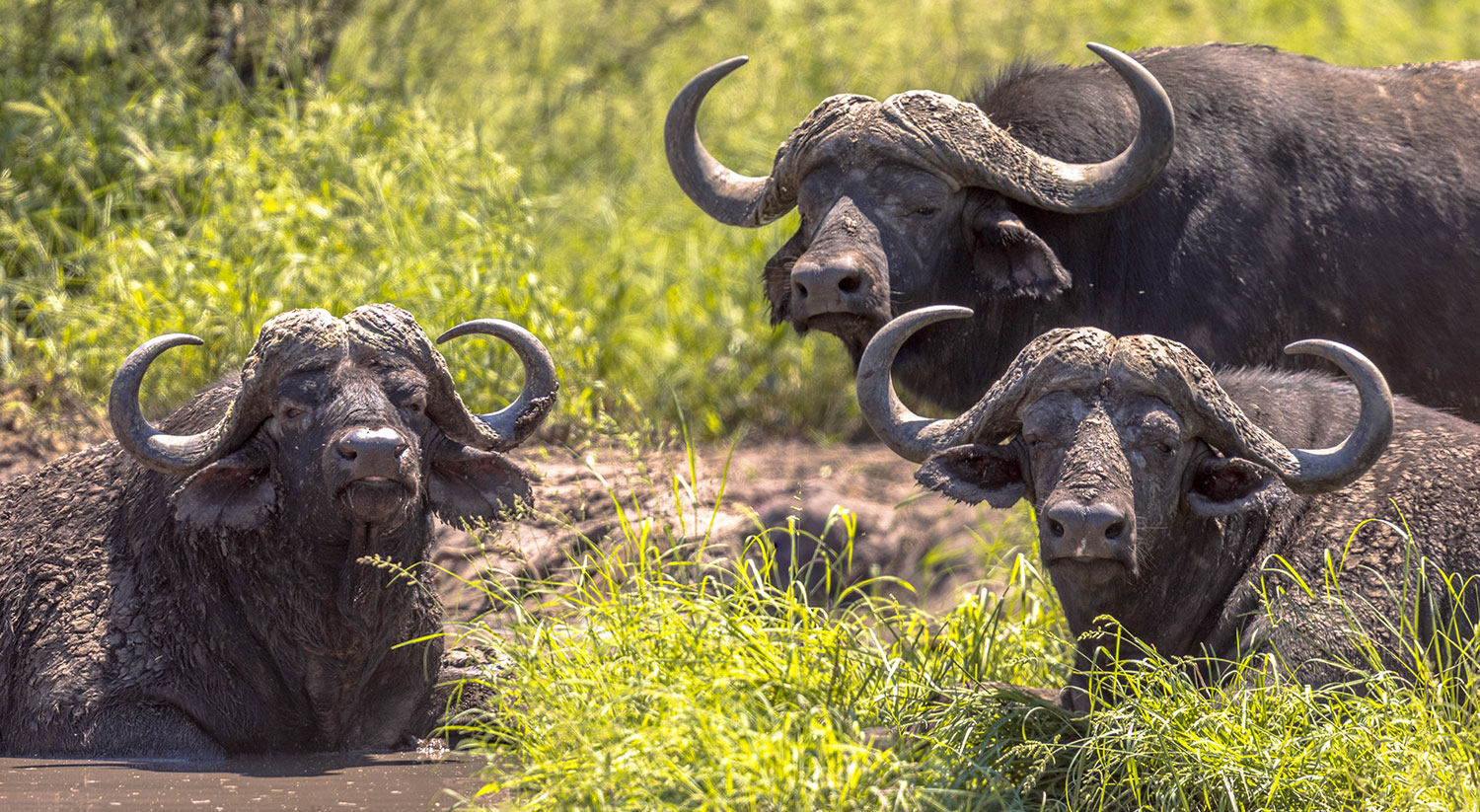
Often underestimated, the African buffalo is considered one of Africa’s most formidable animals.
Large herds roam the savannahs of Murchison Falls, Queen Elizabeth, Kidepo Valley, and Lake Mburo National Parks.
Some herds contain several hundred individuals, creating spectacular scenes during game drives and boat cruises along the Kazinga Channel, where buffalo frequently gather to cool themselves in the water alongside hippos and elephants.
Southern White Rhino
Rhinos disappeared from Uganda during the early 1980s due to heavy poaching.
Today, visitors can once again encounter these magnificent animals at Ziwa Rhino Sanctuary, located approximately halfway between Entebbe and Murchison Falls National Park.
Unlike traditional vehicle safaris, rhino tracking at Ziwa is conducted entirely on foot under the guidance of experienced rangers. Walking quietly through the bush before coming face-to-face with one of these prehistoric giants is an unforgettable experience.
The sanctuary’s successful breeding programme aims to eventually reintroduce rhinos into Uganda’s national parks.
Beyond the Big Five
While the Big Five receive much of the attention, Uganda’s wildlife extends far beyond these famous species. Visitors may also encounter giraffes, hippopotamuses, Nile crocodiles, spotted hyenas, warthogs, Uganda kob, topi, waterbuck, bushbuck, hartebeest, eland, oribi, giant forest hogs, and countless smaller mammals, reptiles, amphibians, and insects.
Whether you’re tracking mountain gorillas through misty rainforest, cruising past pods of hippos on the Nile, or watching thousands of birds fill the skies above a wetland at sunset, Uganda offers an extraordinary diversity of wildlife experiences. Its combination of exceptional biodiversity, successful conservation efforts, and relatively uncrowded parks makes it one of Africa’s most rewarding destinations for nature lovers and photographers alike.