Uganda is often described as the Pearl of Africa, but for wildlife enthusiasts, it is also one of the most biologically diverse countries on Earth. Despite covering just 241,038 square kilometres (93,065 square miles), roughly the size of the United Kingdom. Uganda contains an astonishing variety of ecosystems that support an extraordinary concentration of wildlife.
From the mist-covered rainforests of Bwindi to the vast savannahs of Murchison Falls, the snow-capped peaks of the Rwenzori Mountains, the wetlands of Mabamba, and the volcanic slopes of Mgahinga, Uganda offers habitats rarely found together within a single country.
This diversity is reflected in remarkable numbers:
Wildlife Group | Approximate Number of Species |
Birds | Over 1,090 |
Mammals | Over 345 |
Butterflies | Over 1,200 |
Reptiles | Around 142 |
Amphibians | About 86 |
Fish | More than 600 |
Uganda is located at a unique crossroads where the East African savannah, the West and Central African rainforests, the Albertine Rift, and the Great Lakes region all meet. Species from these different ecological zones overlap here, while many plants and animals found in the Albertine Rift occur nowhere else on Earth.
For travellers, this means it is possible to experience an incredible range of wildlife within a relatively compact itinerary. In just ten days, visitors can watch elephants roaming open plains, track endangered mountain gorillas through ancient rainforest, cruise alongside hippos on the Nile, search for the elusive shoebill in papyrus wetlands, and hike among Afro-alpine vegetation high in the Rwenzori Mountains.
Uganda’s Conservation Success Story
Uganda’s wildlife has not always enjoyed the protection it receives today.
During the political instability of the 1970s and early 1980s, many national parks suffered extensive poaching. Elephant populations declined dramatically, rhinos disappeared entirely from the wild, and several protected areas were left without adequate management.
Over the past three decades, however, Uganda has become one of Africa’s conservation success stories.
The establishment of stronger protected areas, community conservation programmes, anti-poaching patrols, veterinary interventions, and carefully managed tourism has helped many wildlife populations recover. Today, tourism revenue contributes directly to wildlife protection while also supporting local communities living around Uganda’s national parks.
One of the best examples is mountain gorilla conservation. Income generated through gorilla trekking permits helps fund ranger patrols, veterinary care, habitat protection, research, and community development projects, ensuring that conservation benefits both wildlife and the people who live alongside it.
The Big Five
Uganda is one of the few African countries where visitors can, with careful planning, see all of Africa’s famous Big Five—a term originally coined by hunters to describe the five most dangerous animals to hunt on foot, but now celebrated as the continent’s most iconic safari species.
African Lion
The African lion is Uganda’s largest predator and one of the highlights of any safari.
Healthy populations occur in Murchison Falls National Park, Queen Elizabeth National Park, and the remote wilderness of Kidepo Valley National Park.
Queen Elizabeth National Park is internationally famous for its tree-climbing lions, particularly in the Ishasha sector. Unlike most lions, these remarkable cats regularly climb large fig trees and rest on sturdy branches during the hottest part of the day. Scientists believe this unusual behaviour helps them escape insects, avoid the midday heat, and gain better views of potential prey.
Watching a pride of lions lounging high in the branches is one of Africa’s most unique wildlife experiences.
African Leopard
Leopards are Uganda’s most elusive member of the Big Five.
Masters of camouflage and predominantly nocturnal, they are considerably more difficult to spot than lions. However, patient visitors often encounter them during evening game drives in Murchison Falls, Queen Elizabeth, Lake Mburo, and Kidepo Valley National Parks.
Unlike lions, leopards are solitary animals, spending much of their lives alone except during mating or when females are raising cubs.
African Elephant
Uganda is home to both African savannah elephants and the smaller, more elusive African forest elephant.
The largest herds of savannah elephants inhabit Murchison Falls National Park, where they are frequently seen grazing along the River Nile. Queen Elizabeth National Park also supports substantial elephant populations, while Kidepo Valley offers spectacular sightings against dramatic mountain backdrops.
Forest elephants inhabit the dense forests of western Uganda, although they are rarely seen due to the thick vegetation.
Adult bull elephants can weigh over six tonnes, making them the largest land mammals on Earth.
African Buffalo
Often underestimated, the African buffalo is considered one of Africa’s most formidable animals.
Large herds roam the savannahs of Murchison Falls, Queen Elizabeth, Kidepo Valley, and Lake Mburo National Parks.
Some herds contain several hundred individuals, creating spectacular scenes during game drives and boat cruises along the Kazinga Channel, where buffalo frequently gather to cool themselves in the water alongside hippos and elephants.
Southern White Rhino
Rhinos disappeared from Uganda during the early 1980s due to heavy poaching.
Today, visitors can once again encounter these magnificent animals at Ziwa Rhino Sanctuary, located approximately halfway between Entebbe and Murchison Falls National Park.
Unlike traditional vehicle safaris, rhino tracking at Ziwa is conducted entirely on foot under the guidance of experienced rangers. Walking quietly through the bush before coming face-to-face with one of these prehistoric giants is an unforgettable experience.
The sanctuary’s successful breeding programme aims to eventually reintroduce rhinos into Uganda’s national parks.
Uganda – The Primate Capital of East Africa
If Uganda has one defining wildlife experience, it is undoubtedly its primates.
The country boasts the highest diversity of primate species in East Africa, making it one of the world’s premier destinations for primate tourism.
Ancient rainforests, abundant fruiting trees, and relatively stable climates have created ideal conditions for primates to thrive.
Uganda is home to more than 20 species of primates, including great apes, monkeys, baboons, and bush babies.
Mountain Gorilla
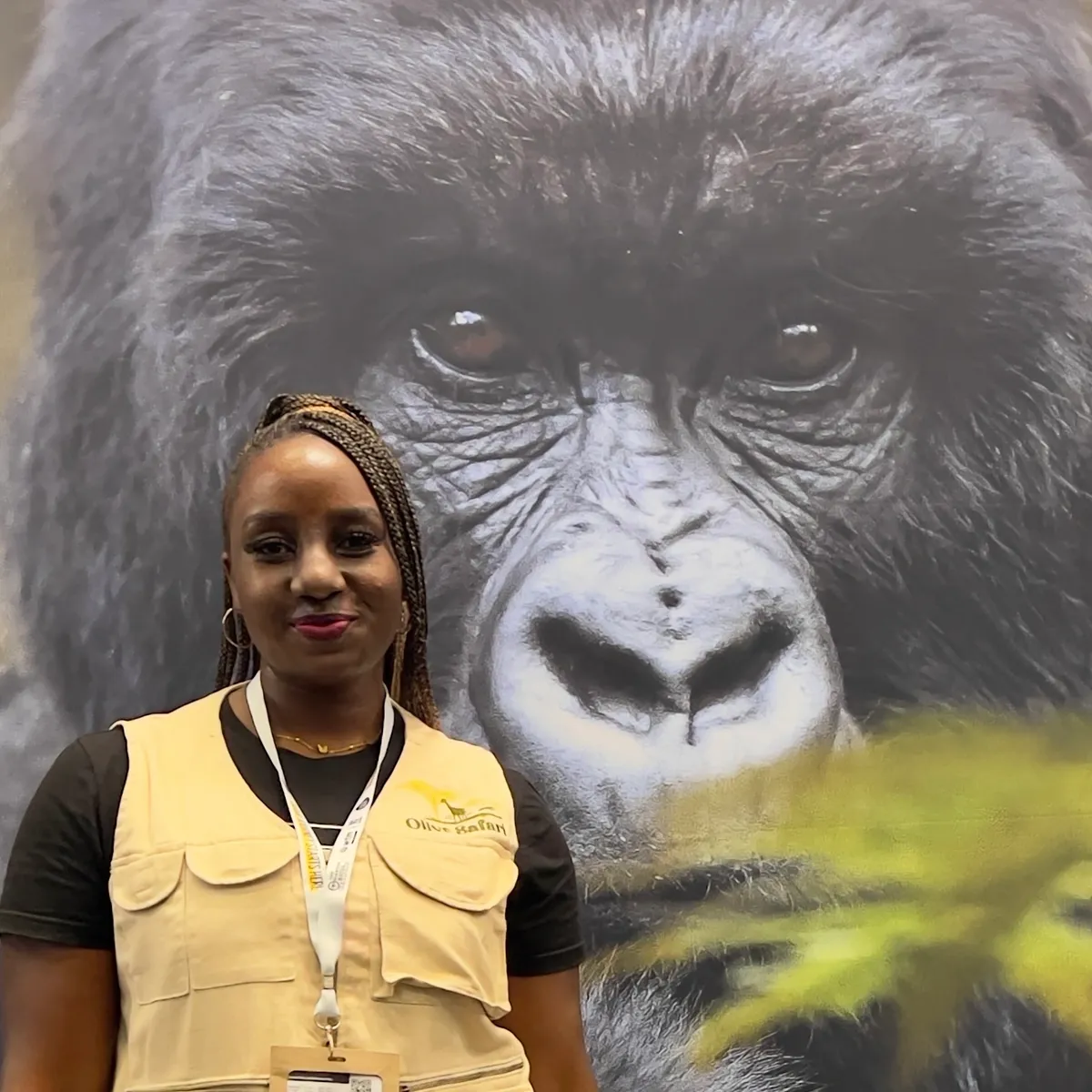
The mountain gorilla is Uganda’s greatest wildlife treasure.
Found only in Uganda, Rwanda, and the Democratic Republic of Congo, these gentle giants are among the world’s most endangered mammals.
Uganda protects approximately half of the world’s remaining mountain gorillas, living within Bwindi Impenetrable National Park and Mgahinga Gorilla National Park.
Visitors trek through dense rainforest with experienced guides before spending one unforgettable hour observing a habituated gorilla family. Watching silverbacks interact with playful youngsters and attentive mothers is often described as one of the greatest wildlife encounters on Earth.
Chimpanzee
Chimpanzees share approximately 98–99% of human DNA, making encounters with them both fascinating and deeply emotional.
Uganda is considered one of Africa’s finest destinations for chimpanzee tracking, particularly in Kibale National Park, which supports around 1,500 chimpanzees and one of the highest densities of primates anywhere in Africa.
Other excellent locations include Kyambura Gorge and Budongo Forest.
Golden Monkey
The endangered golden monkey is found only within the Virunga Mountains.
Its brilliant golden-orange fur contrasts beautifully with the bamboo forests of Mgahinga Gorilla National Park, where visitors can join guided tracking excursions to observe lively troops feeding, grooming, and leaping through the canopy.
Other Monkey Species
Uganda’s forests support an impressive variety of monkey species, many of which are regularly encountered during forest walks and chimpanzee treks.
Common sightings include:
- Black-and-white colobus monkeys
- Red-tailed monkeys
- L’Hoest’s monkeys
- Grey-cheeked mangabeys
- Blue monkeys
- Vervet monkeys
- Olive baboons
- Red colobus monkeys (rare)
Each species occupies a different ecological niche, feeding on fruits, leaves, flowers, seeds, or insects, and together they play an essential role in maintaining healthy forest ecosystems by dispersing seeds and pollinating plants.
Uganda’s Incredible Birdlife
With over 1,090 recorded bird species, Uganda is one of the greatest birdwatching destinations on the planet.
To put this into perspective, Uganda hosts:
- More than 50% of all bird species are found in Africa
- Approximately 11% of the world’s bird species
- One of the highest bird diversities anywhere for a country of its size
The country’s extraordinary birdlife results from its varied habitats, ranging from tropical rainforest and papyrus wetlands to alpine moorlands, lakes, rivers, and open savannah.
Whether you’re an experienced birder or simply enjoy wildlife, it is almost impossible to spend a day outdoors in Uganda without encountering colourful and fascinating birdlife.
Shoebill
The legendary shoebill is Uganda’s most sought-after bird.
Standing over 1.2 metres tall, this prehistoric-looking species has remained largely unchanged for millions of years.
Its enormous shoe-shaped bill allows it to capture lungfish, frogs, snakes, and even small crocodiles.
One of the best places in Africa to see the shoebill is Mabamba Bay Wetland, located just a short drive and canoe ride from Entebbe.
Green-breasted Pitta
This brilliantly coloured forest bird is one of Uganda’s greatest birding prizes.
Tiny, secretive, and beautifully patterned with emerald green, crimson, turquoise, and golden-yellow plumage, it attracts birdwatchers from around the world to Kibale Forest during the breeding season.
African Green Broadbill
One of the Albertine Rift’s most restricted endemic species, the African green broadbill occurs in only a handful of forests worldwide.
Bwindi Impenetrable National Park offers one of the best opportunities to see this exceptionally rare bird.
Great Blue Turaco
Among Uganda’s most spectacular birds, the great blue turaco is instantly recognisable by its vivid blue wings, yellow facial markings, and crimson flight feathers.
Its loud, echoing calls are a familiar sound in many of Uganda’s forests.
African Fish Eagle
Few sounds capture the spirit of Africa quite like the haunting cry of the African fish eagle.
Common along the Nile, Lake Victoria, Kazinga Channel, and many of Uganda’s lakes and rivers, this majestic raptor is frequently seen perched high above the water before swooping down to catch fish with its powerful talons.
Beyond the Big Five
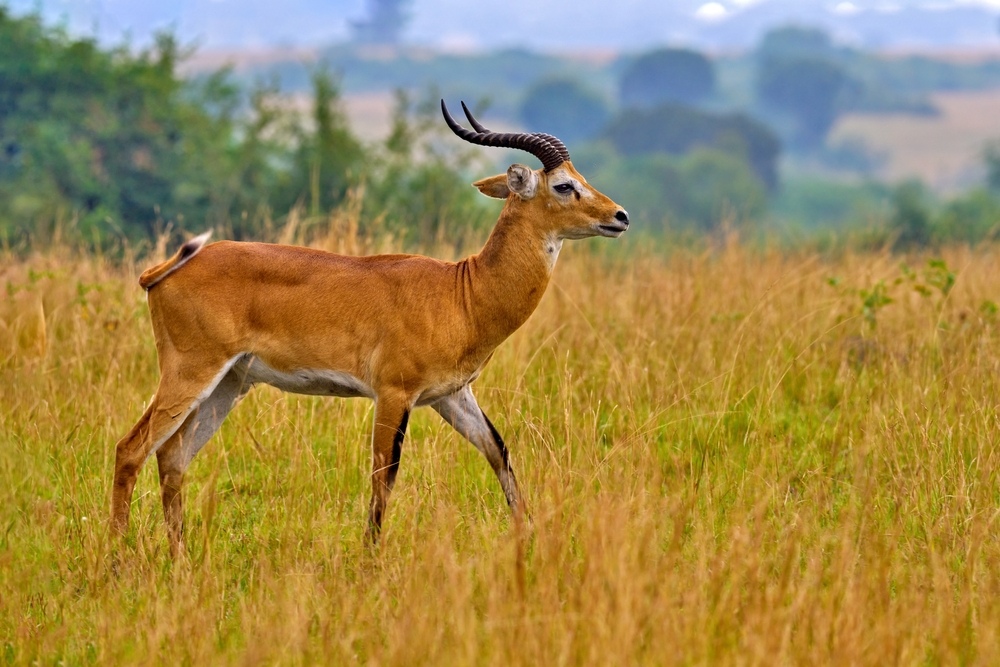
While the Big Five receive much of the attention, Uganda’s wildlife extends far beyond these famous species. Visitors may also encounter giraffes, hippopotamuses, Nile crocodiles, spotted hyenas, warthogs, Uganda kob, topi, waterbuck, bushbuck, hartebeest, eland, oribi, giant forest hogs, and countless smaller mammals, reptiles, amphibians, and insects.
Whether you’re tracking mountain gorillas through misty rainforest, cruising past pods of hippos on the Nile, or watching thousands of birds fill the skies above a wetland at sunset, Uganda offers an extraordinary diversity of wildlife experiences. Its combination of exceptional biodiversity, successful conservation efforts, and relatively uncrowded parks makes it one of Africa’s most rewarding destinations for nature lovers and photographers alike.