Why Rwanda Has Become Africa’s Luxury Safari Capital


Mountain gorillas are among the world’s most intelligent and socially complex mammals. Living in close-knit family groups, they display remarkable cooperation, deep emotional bonds, and behaviours that are strikingly similar to our own. Every family has its own personalities, relationships, and hierarchy, making no two gorilla encounters exactly alike.
Whether in Uganda’s Bwindi Impenetrable National Park and Mgahinga Gorilla National Park or Rwanda’s Volcanoes National Park, mountain gorillas spend their days raising young, communicating with one another, defending their families, foraging through the forest, and strengthening social bonds. Watching these interactions unfold in the wild is one of the most extraordinary wildlife experiences on Earth.
Understanding how gorilla families are organised, how they communicate, and how they live their daily lives adds a whole new dimension to a gorilla trek. Instead of simply observing gorillas, you’ll begin to recognise the role of the dominant silverback, the protective instincts of mothers, the playful behaviour of juveniles, and the intricate relationships that hold the family together.
In this guide, we’ll explore the fascinating social structure of mountain gorillas, from family hierarchy and leadership to communication, parenting, play, feeding habits, daily routines, and the remarkable behaviours that make these great apes so closely connected to humans.
A mountain gorilla family, also known as a gorilla troop or gorilla group, is a stable social unit centred around a dominant adult male called the silverback. These family groups are the foundation of mountain gorilla society, with each member playing an important role in the survival and well-being of the group.
A typical gorilla family includes:
Family size varies depending on habitat, food availability, and the group’s history. Some gorilla families consist of as few as five individuals, while others have more than 30 members. Most habituated mountain gorilla families visited during gorilla trekking in Uganda and Rwanda typically include around 10 to 15 gorillas.
At the centre of every mountain gorilla family is the silverback—the dominant adult male whose leadership keeps the group safe, organised, and united. Instantly recognisable by the broad patch of silver-grey hair that develops across his back as he reaches maturity, the silverback is both the family’s protector and decision-maker.
Far more than simply the strongest member of the group, the silverback is responsible for nearly every aspect of family life. Throughout the day, he decides where the gorillas will feed, when they will travel, and where they will build their nests for the night. He constantly watches for potential dangers, intervenes when disagreements arise, and protects the group from rival males and other threats.
A silverback’s responsibilities include:
Despite their immense strength—adult males can weigh up to 200 kilograms and possess incredible power—silverbacks are remarkably calm and gentle. They rarely resort to physical aggression. Instead, they rely on impressive displays of dominance, including the famous chest beat, standing upright, charging, branch shaking, and a series of deep vocalisations. These displays are usually enough to discourage rivals without serious fighting, helping maintain peace within both the family and the surrounding gorilla population.
While the silverback leads the family, adult females form the foundation of the family’s daily life. They devote years to raising their young, maintaining strong social bonds, and helping create the close-knit relationships that define mountain gorilla society.
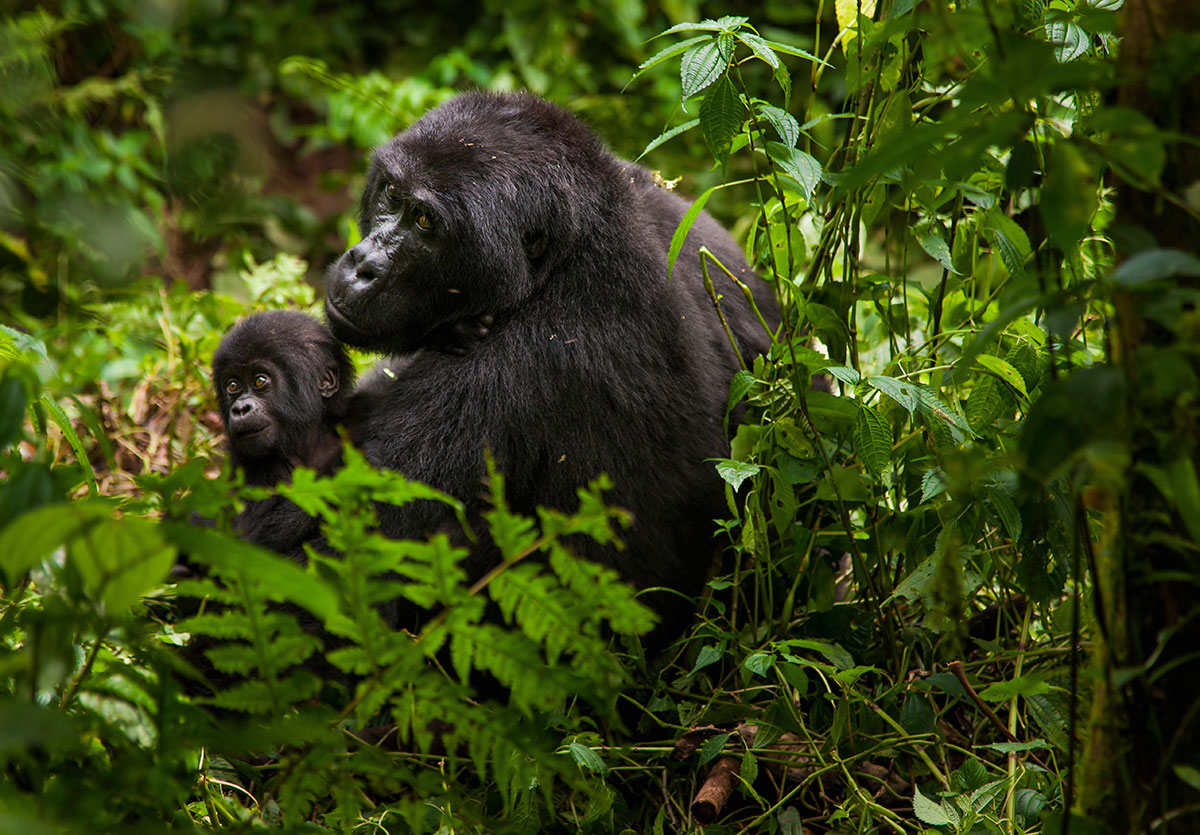
After a pregnancy of around 8½ months, a female usually gives birth to a single infant. During the first months of life, the baby depends entirely on its mother for nourishment, warmth, and protection. As it grows stronger, it begins clinging to her chest before eventually riding securely on her back as the family moves through the forest.
Mother gorillas guide their offspring through every stage of development, teaching them the skills they need to survive, including:
The bond between a mother and her infant is one of the strongest in the animal kingdom. During gorilla trekking in Uganda and Rwanda, visitors are often captivated by the gentle moments that unfold naturally—a mother carefully grooming her baby, nursing a newborn, or patiently encouraging an adventurous youngster back to her side. These intimate interactions reveal the remarkable intelligence, compassion, and family values that make mountain gorillas so closely connected to humans.
Mountain gorillas are highly social animals that rely on a sophisticated system of communication to maintain strong family bonds and coordinate daily life. Rather than depending on a single form of communication, they use a combination of vocalisations, facial expressions, body language, gestures, and touch to express emotions, warn of danger, reassure one another, and strengthen relationships within the group.
Visitors on gorilla trekking safaris in Uganda and Rwanda are often surprised by how expressive gorillas are. During a single one-hour encounter, you may witness:
Researchers have identified more than 20 distinct vocalisations, each serving a specific purpose. Some calls help keep family members together in thick vegetation, while others signal contentment, warn of potential danger, or reinforce social bonds. Much like humans, gorillas communicate constantly, even when they appear to be resting quietly.
One of the questions most frequently asked before gorilla trekking in Uganda or Rwanda is, “What do mountain gorillas do all day?”
Although every family follows its own rhythm, mountain gorillas live surprisingly structured lives centred around feeding, resting, socialising, and caring for one another.
As dawn breaks over the rainforest, the gorillas wake in the sleeping nests they built the previous evening from branches, leaves, and other vegetation. After a slow start to the day, the family gathers before beginning its food search, with the silverback deciding when and where to move.
Mountain gorillas spend up to half of their waking hours feeding, consuming an enormous quantity of vegetation to sustain their large bodies.
Their diet consists primarily of:
An adult mountain gorilla may eat up to 30 kilograms (66 pounds) of vegetation each day, carefully selecting nutritious plants as the family gradually moves through its home range.
After several hours of feeding, the family usually settles down to rest. For many visitors, this is one of the most memorable parts of a gorilla trek because it offers the best opportunity to observe the family’s social life.
Mothers nurse their infants, juveniles chase and wrestle with one another, adults groom close companions, and curious youngsters explore under the watchful eye of the silverback. These peaceful moments reveal the remarkable intelligence, patience, and emotional connections that exist within every gorilla family.
As temperatures begin to cool, the family resumes feeding while moving slowly through the forest. Unlike many large mammals, mountain gorillas rarely travel great distances because their forest habitat provides an abundant and reliable supply of food throughout the year.
As daylight fades, every gorilla prepares for the night by building a fresh sleeping nest. Adults usually construct sturdy nests on the forest floor using branches and leaves, while younger gorillas often choose elevated nests in trees, where they can sleep more securely.
By sunrise, the cycle begins again, a daily routine that mountain gorillas have followed in the forests of Uganda and Rwanda for countless generations.
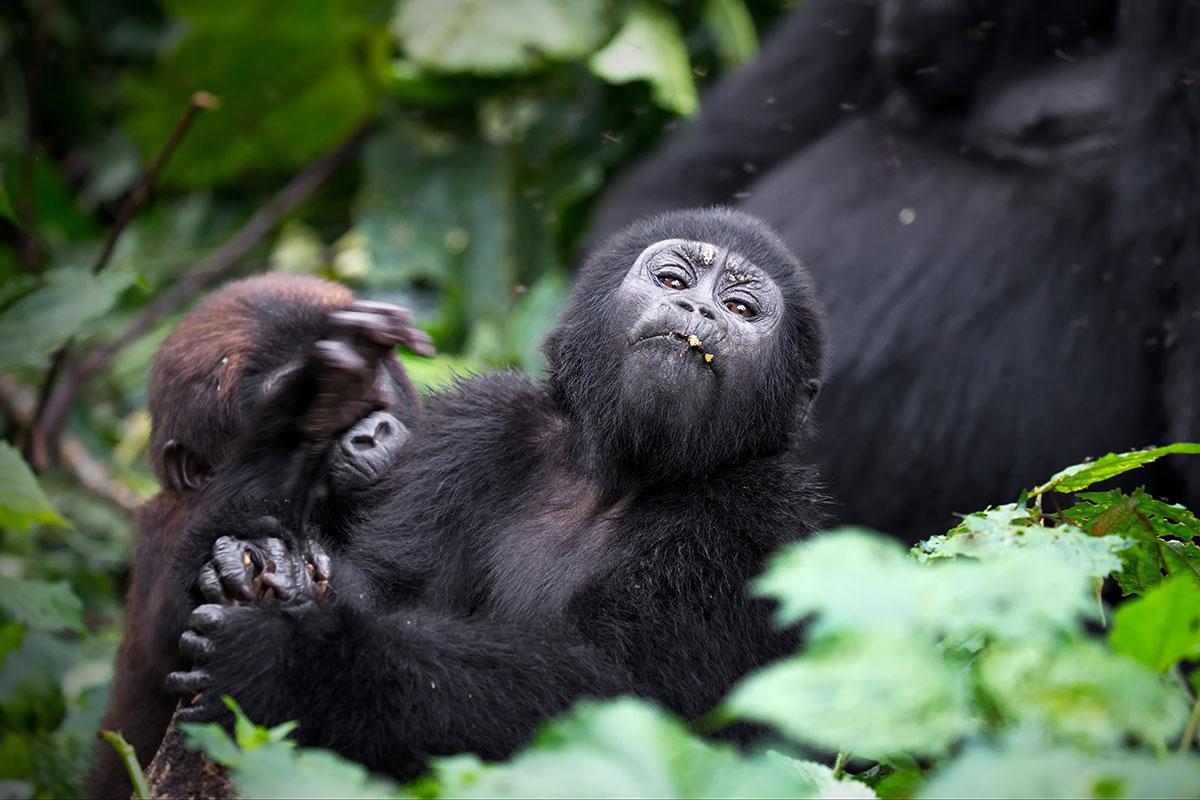
Life in a gorilla family is not all feeding and resting. For young gorillas, play is one of the most important parts of the day. Much like human children, juveniles are naturally curious and energetic, spending hours exploring their surroundings and interacting with one another.
Their favourite activities include:
These playful encounters are far more than entertainment. They help young gorillas develop strength, coordination, confidence, and the social skills they will need throughout their lives. Play also strengthens the bonds between family members and helps establish friendships within the group.
For many visitors, watching juvenile gorillas tumble through the undergrowth or mischievously challenge one another is one of the most joyful and memorable moments of gorilla trekking in Uganda’s Bwindi Impenetrable National Park and Mgahinga Gorilla National Park or Rwanda’s Volcanoes National Park.
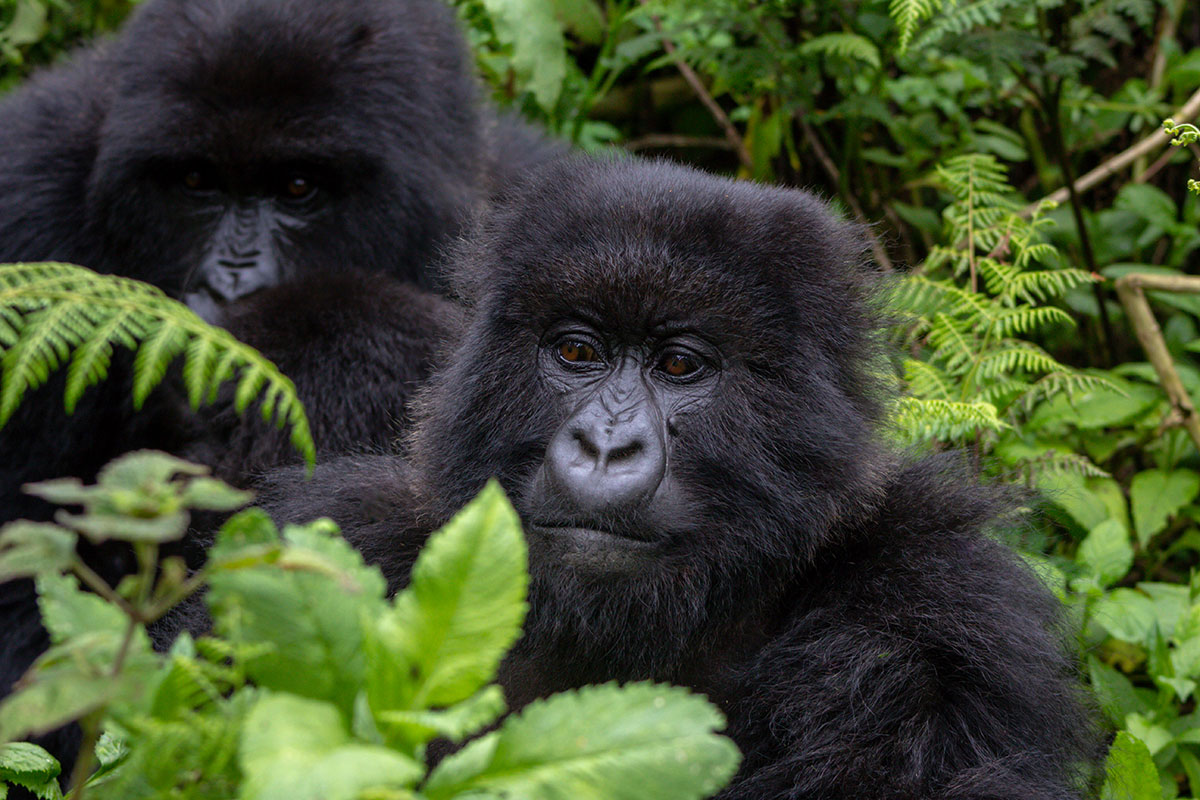
Despite their immense size and strength, mountain gorillas are remarkably peaceful animals. Aggression is rare within established families, and most disagreements are settled without physical conflict.
Silverbacks maintain order through posture, vocalisations, facial expressions, and the iconic chest beat that has become synonymous with gorillas. These impressive displays communicate confidence and authority, often preventing conflicts before they begin. Physical confrontations usually occur only when rival silverbacks compete for leadership of a family or attempt to attract females from another group.
The calm nature of mountain gorillas is one of the reasons gorilla trekking has become such a safe and rewarding wildlife experience. Habituated families are accustomed to the careful presence of visitors, allowing extraordinary encounters while always respecting the animals’ space and well-being.
One of the reasons gorilla encounters leave such a lasting impression is that their behaviour often feels strikingly familiar. As our close relatives in the animal kingdom, mountain gorillas display a wide range of emotions and social behaviours that closely resemble our own.
Researchers have documented behaviours including:
Visitors may witness mothers comforting distressed infants, siblings embracing after play, adults gently grooming one another, or family members remaining close to elderly or injured companions. These moments reveal the deep emotional connections that exist within every gorilla family and help explain why so many people describe gorilla trekking as a profoundly moving experience rather than simply a wildlife safari.
Wild mountain gorillas survive in only three countries: Uganda, Rwanda, and the Democratic Republic of the Congo. For most international visitors, Uganda and Rwanda offer the most accessible and well-established gorilla trekking experiences.
In Uganda, gorilla trekking takes place in:
In Rwanda, visitors trek habituated gorilla families in:
Experienced park rangers lead small groups to carefully habituated gorilla families, allowing visitors to spend one unforgettable hour observing these extraordinary animals while supporting conservation programmes and the local communities that help protect them.
Understanding how mountain gorilla families live transforms a gorilla trek from simply seeing wildlife into appreciating one of nature’s most sophisticated social societies.
Every gorilla family depends on strong leadership, devoted parenting, lifelong social bonds, healthy forests, and the protection of its natural habitat. When visitors witness these relationships firsthand, they gain a deeper understanding of why conserving mountain gorillas is about far more than protecting a single species it’s about preserving an entire way of life that has evolved over thousands of years.
Today, thanks to dedicated conservation efforts, carefully managed tourism, scientific research, and the support of local communities, mountain gorilla populations are showing encouraging signs of recovery. Every responsible gorilla trek in Uganda or Rwanda contributes directly to that success, helping ensure future generations can continue to experience one of the world’s most extraordinary wildlife encounters.
Reading about mountain gorillas is one thing. Standing quietly in the rainforest as a silverback watches over his family, infants tumble through the vegetation, and mothers gently care for their young is something entirely different. Whether you choose Uganda’s ancient forests or Rwanda’s volcanic slopes, gorilla trekking offers one of the most intimate wildlife encounters on Earth.
At Olive Safari Uganda, we create tailor-made gorilla trekking safaris in both Uganda and Rwanda, helping you experience these remarkable families responsibly while supporting the conservation efforts that protect them for generations to come.

A mountain gorilla family typically consists of 5 to 30 individuals, although most habituated families visited during gorilla trekking in Uganda and Rwanda have around 10 to 15 members. Family size changes over time as infants are born, juveniles mature, and younger males sometimes leave to establish their own groups.
Every gorilla family is led by a dominant silverback. He protects the group, settles disputes, decides where the family feeds and travels, chooses safe nesting sites each evening, and defends the group from rival males. His leadership is essential to the family’s survival and stability.
Mountain gorillas are herbivores, feeding mainly on leaves, stems, bamboo shoots, wild celery, roots, tree bark, flowers, and other vegetation. When available, they also eat seasonal fruits. An adult mountain gorilla can consume up to 30 kilograms (66 pounds) of vegetation every day.
The best places to observe habituated mountain gorilla families are:
All three parks offer professionally guided gorilla trekking experiences that allow visitors to spend time with mountain gorillas in their natural habitat.
Mountain gorillas are naturally gentle and peaceful animals. The gorilla families visited during trekking have been carefully habituated to the presence of researchers and tourists over many years. When visitors follow their ranger’s instructions, maintain a respectful distance, and remain calm, gorilla trekking is considered a safe and well-managed wildlife experience.
Once a habituated gorilla family has been located, visitors are allowed to spend one hour observing the gorillas. This strict time limit helps minimise disturbance while allowing guests to enjoy one of the world’s most extraordinary wildlife encounters.
Chest beating is one of the mountain gorilla’s best-known behaviours, but it is not always a sign of aggression. Silverbacks use chest beating to communicate with rival males, demonstrate strength, maintain order within the family, and sometimes express excitement. Younger gorillas often imitate this behaviour as they grow and learn.
Yes. Mountain gorillas build a fresh sleeping nest every evening using branches, leaves, and other vegetation. Adult gorillas usually construct their nests on the forest floor, while younger gorillas often sleep in nests built in trees.
Yes. Uganda offers gorilla trekking in Bwindi Impenetrable National Park and Mgahinga Gorilla National Park, while Rwanda offers trekking in Volcanoes National Park. Both countries protect habituated gorilla families and provide exceptional trekking experiences led by experienced park rangers.
A silverback is a mature adult male, usually over 12 years old, that has developed the distinctive silver-grey hair across his back. A blackback is a younger adult male that has not yet reached full maturity. Blackbacks often remain within their birth family before eventually leaving to establish their own groups or take over another family.
Learning about gorilla family structure, communication, and daily behaviour helps visitors better appreciate what they are observing in the forest. Recognising the role of the silverback, the devotion of mothers, the curiosity of juveniles, and the close social bonds within the family transforms a gorilla trek from simply watching wildlife into witnessing one of nature’s most remarkable societies.