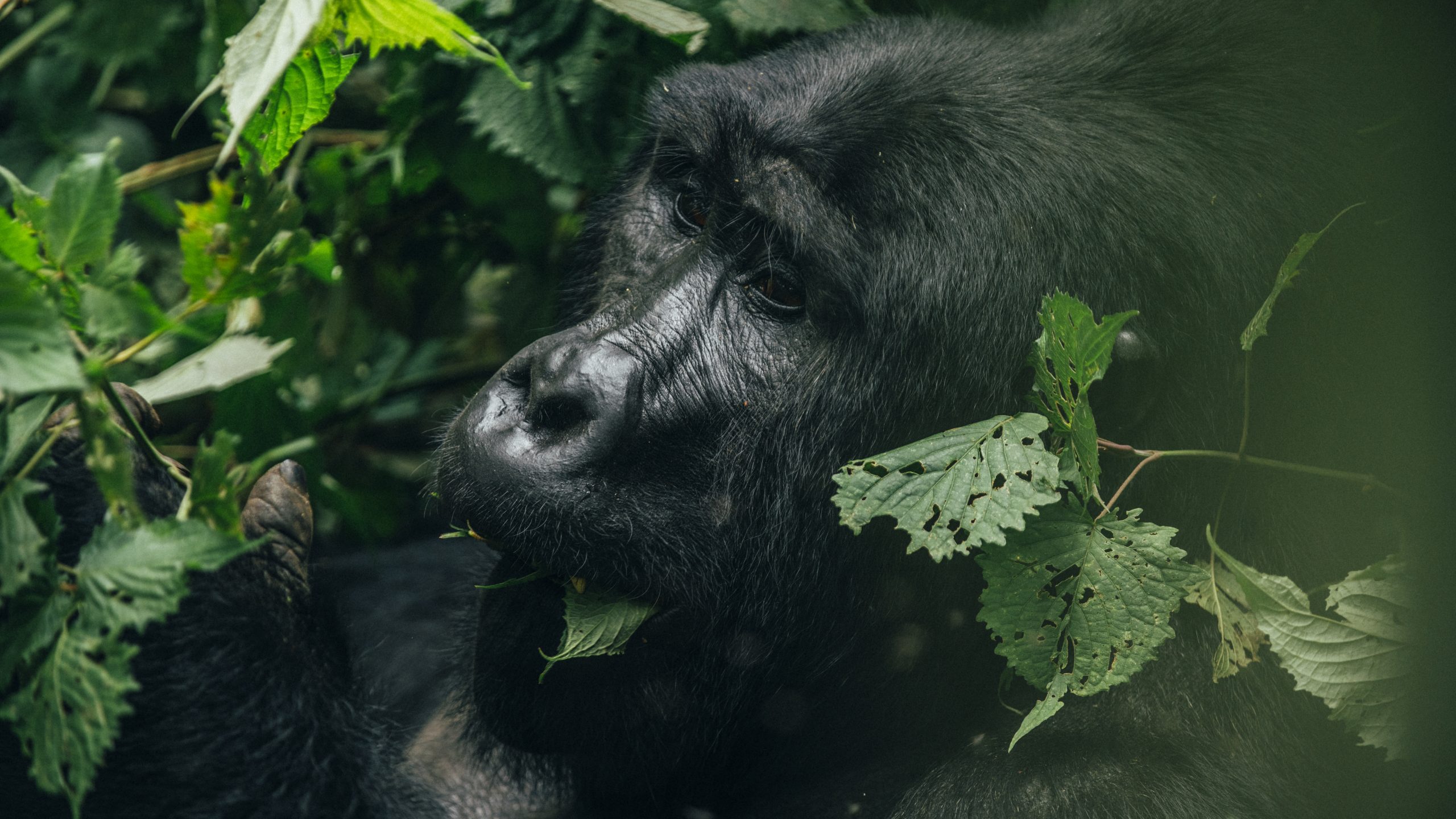
For many wildlife enthusiasts, standing just a few metres away from a family of wild mountain gorillas is the ultimate African safari experience. Found only in the misty forests of the Virunga Massif and Bwindi Impenetrable National Park, fewer than 1,100 mountain gorillas remain in the wild, making every encounter both rare and profoundly moving.
Uganda and Rwanda are the world’s two leading destinations for gorilla trekking. Both offer professionally guided experiences, exceptional conservation standards, and the opportunity to spend one unforgettable hour with a habituated gorilla family. Yet while the encounter itself is equally extraordinary, the overall experience differs considerably between the two countries.
From permit costs and trekking terrain to luxury accommodation and accessibility, choosing between Uganda and Rwanda depends on the type of journey you want to experience.
Gorilla Permit Costs
One of the biggest differences between Uganda and Rwanda is the price of a gorilla trekking permit.
Uganda offers one of the best-value wildlife experiences in Africa. Gorilla permits cost USD 800 per person for international non-residents, allowing visitors to trek one of the many habituated gorilla families in Bwindi Impenetrable National Park or Mgahinga Gorilla National Park.
In Rwanda, permits cost USD 1,500 per person, making it the most expensive gorilla trekking destination in the world. Rwanda intentionally follows a high-value, low-volume tourism model, using permit revenue to support conservation, research, park management, and community development while limiting visitor numbers.
For travellers focused on value, Uganda offers significant savings—particularly for couples, families, or longer East African itineraries.
Accessibility
Rwanda is often regarded as the easiest destination for gorilla trekking.
Volcanoes National Park is approximately a 2.5-hour drive from Kigali International Airport, allowing many visitors to arrive in Rwanda, trek the following morning, and depart shortly afterwards. This convenience makes Rwanda particularly attractive to travellers with limited time or those combining gorilla trekking with business travel.
Uganda requires a little more travel, but rewards visitors with greater diversity. Bwindi Impenetrable National Park is reached by a scenic drive of around 8 to 10 hours from Entebbe or Kampala, although many travellers choose scheduled domestic flights that reduce travel time to around one hour before a short road transfer to their lodge.
Rather than being a disadvantage, the journey through Uganda introduces travellers to rolling hills, tea plantations, rural villages, and spectacular landscapes that become an integral part of the safari experience.
Trekking Terrain
Both countries require a reasonable level of fitness, but the trekking experience differs.
Uganda’s Bwindi Impenetrable National Park is exactly as its name suggests—a dense, ancient rainforest characterised by steep hillsides, thick vegetation, winding forest trails, and varying altitudes. Trekking conditions can be physically demanding, particularly after rainfall, but they also create an authentic wilderness experience unlike anywhere else in Africa.
Uganda also offers gorilla trekking in Mgahinga Gorilla National Park, where the terrain is more open, with bamboo forests and volcanic slopes providing different scenery and often easier visibility.
Rwanda’s Volcanoes National Park generally offers less dense vegetation and more open bamboo forests. While some gorilla families require challenging hikes, many are found on the lower volcanic slopes, resulting in shorter and less demanding treks on average.
Neither destination can guarantee the length or difficulty of a trek, as gorillas move freely each day, but Rwanda is often considered the more accessible option for travellers concerned about strenuous hiking.
The Gorilla Encounter
Once you reach the gorillas, the experience is remarkably similar in both countries.
Visitors spend up to one hour observing a habituated gorilla family as they feed, groom, play, and interact naturally within their forest home. Watching silverbacks quietly supervise their families, mothers caring for infants, and curious juveniles tumbling through the vegetation creates one of the most emotional wildlife encounters on Earth.
Strict conservation regulations govern every trek, including limited group sizes, minimum viewing distances, and carefully managed visitor numbers to minimise disturbance.
Whether in Uganda or Rwanda, the privilege of sharing an hour with mountain gorillas remains equally unforgettable.

Luxury Accommodation
Both countries offer exceptional luxury lodges, but with different styles and settings.
Uganda’s luxury lodges are deeply integrated into the rainforest, creating an intimate connection with nature. Properties such as Clouds Mountain Gorilla Lodge, A&K Gorilla Forest Camp, and Erebero Hills combine elegant accommodation with spectacular forest views, personalised service, and immersive conservation experiences.
Rwanda has developed an internationally recognised luxury hospitality sector centred around Volcanoes National Park. World-renowned properties including Singita Kwitonda Lodge, Bisate Lodge, Bisate Reserve, One&Only Gorilla’s Nest, and Sabyinyo Silverback Lodge offer architectural excellence, award-winning spas, exceptional dining, and highly personalised service.
While Rwanda arguably offers a larger concentration of ultra-luxury lodges, Uganda delivers equally memorable hospitality, often in more secluded and natural settings.
Beyond Gorilla Trekking
For travellers planning a longer safari, Uganda offers significantly greater diversity.
A single itinerary can combine gorilla trekking with chimpanzee tracking in Kibale National Park, classic wildlife safaris in Queen Elizabeth, Murchison Falls, or Kidepo Valley National Parks, boat cruises on the Kazinga Channel and the Nile, walking safaris, birdwatching, and cultural experiences.
Rwanda’s strengths lie in its compact size and efficiency. Alongside gorilla trekking, visitors can explore Akagera National Park for a Big Five safari, Nyungwe National Park for chimpanzee tracking and canopy walks, relax on the shores of Lake Kivu, or experience Kigali’s thriving arts, culinary, and cultural scene.
Both destinations complement one another exceptionally well, and many travellers choose to combine them into a single journey.
Logistics and Ease of Travel
Rwanda is often regarded as one of Africa’s easiest countries to travel through. Excellent roads, short driving distances, efficient services, and a clean, well-organised capital make logistics remarkably straightforward.
Uganda requires more travel between destinations due to its larger size, but this also allows visitors to experience an incredible variety of landscapes and ecosystems. Domestic flights are widely available for travellers wishing to reduce road travel while maintaining a seamless luxury experience.
With a well-planned itinerary, both countries offer excellent infrastructure and high-quality guiding.
Uganda vs Rwanda: Which Should You Choose?
There is no definitive winner—only the destination that best suits your travel style.
Choose Uganda if you:
- Want the best value for money.
- Prefer a longer safari combining gorillas with classic wildlife experiences.
- Enjoy adventurous rainforest trekking.
- Want greater diversity of national parks and landscapes.
- Appreciate immersive wilderness experiences with fewer crowds.
Choose Rwanda if you:
- Have limited time.
- Want the quickest access to gorilla trekking.
- Prefer shorter transfers and generally easier logistics.
- Are seeking ultra-luxury lodges with world-class wellness facilities.
- Prefer a safari centred around comfort, efficiency, and exclusivity.
Why Not Experience Both?
For many travellers, the ultimate East African safari includes both Uganda and Rwanda.
A journey might begin with gorilla trekking in Bwindi Impenetrable National Park before crossing into Rwanda to explore Volcanoes National Park, Kigali, Akagera National Park, or Nyungwe Forest. Others choose to trek gorillas in Rwanda before continuing into Uganda for chimpanzee tracking and classic wildlife safaris.
At Olive Safari Uganda, we specialise in designing tailor-made cross-border itineraries that combine the very best of both countries. From securing gorilla permits and selecting the finest luxury lodges to arranging private transfers, domestic flights, and experienced guides, every detail is carefully planned to create a seamless and unforgettable safari.
Whether you choose Uganda, Rwanda, or both, one thing remains certain: meeting mountain gorillas in the wild is one of the most extraordinary wildlife experiences on the planet—an encounter that will stay with you long after your journey through Africa has come to an end.